 Santa Clarita Crossroads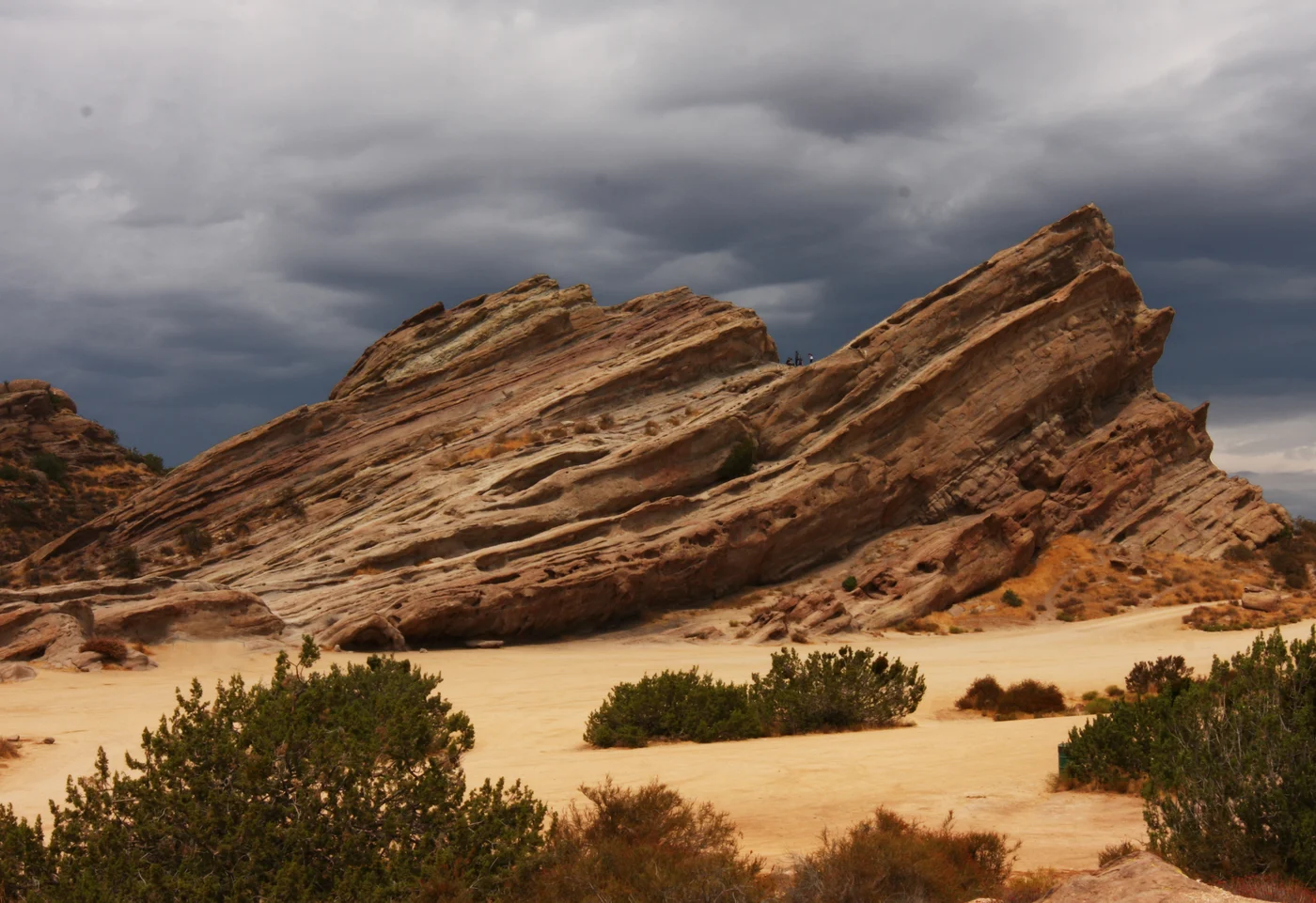

A landscape can be familiar in person and unfamiliar on screen. Santa Clarita's Film Office describes a range of locations and terrain available to productions. The city's film history reaches back to the silent era, with William S. Hart, Harry Carey and Charlie Chaplin among the figures discussed in its historical account. That history gives the phrase “Hollywood North” substance without turning every hillside into a studio attraction.
A region with more than one kind of location
Distinguish the city from the wider setting around it. Vasquez Rocks is in nearby Agua Dulce, not inside Santa Clarita's city limits. Los Angeles County identifies the natural area as a location used in film, television and commercials. Its tilted formations provide a striking visual reference, but the park is also a landscape with its own natural and cultural significance. It is more than a backdrop borrowed from a familiar scene.
The county's description recognizes the Tataviam place name Mapipinga and provides information about the nature center and trails. Reading that material adds context that a screen appearance cannot provide. A visitor can notice the layering and angles of the rocks, then learn about the place through the institution responsible for interpreting it. The photograph here is an earlier view; it does not report current weather, access or filming activity.
Public access and production work are different
The Film Office's location directory also includes movie ranches. A listing intended for production planning is not an invitation to walk onto a working property. Before planning any visit, use the location's own public-access information and follow the operator's rules. A production address, a film credit and a visitor destination are different kinds of information, even when they refer to the same place.
This distinction is useful when exploring the region. Start with an identified public destination and its current visitor guidance. Avoid assuming that a gate is open because a familiar film was made beyond it, or that a scene was shot at the exact viewpoint in a photograph. The city and county sources support the broader story without requiring speculation about what happens at a particular location today.
Santa Clarita's film history also connects the constructed and the natural. Ranch settings, streets and topography offer different visual possibilities. The interest is in that variety: a place can serve a fictional story while still having residents, working businesses and cultural history outside the frame. Looking at both uses makes the region more understandable than treating it as a collection of movie references.
Keep the insurance question specific
A location photograph is not a property assessment. For a homeowner, the useful connection is a reminder to distinguish the building, the way it is used and the causes of loss addressed by its insurance. If circumstances change, describe the actual change to the agency instead of assuming that familiar surroundings mean the policy still fits. The California Department of Insurance's residential guide explains why forms, exclusions and endorsements need to be read together.
Ask about your own property and activities; do not borrow conclusions from a film location or a nearby landmark. This site's personal-insurance information is not production-insurance advice. The issued policy and endorsements control, and neither a local history nor a photograph establishes coverage or eligibility.