 Santa Clarita Crossroads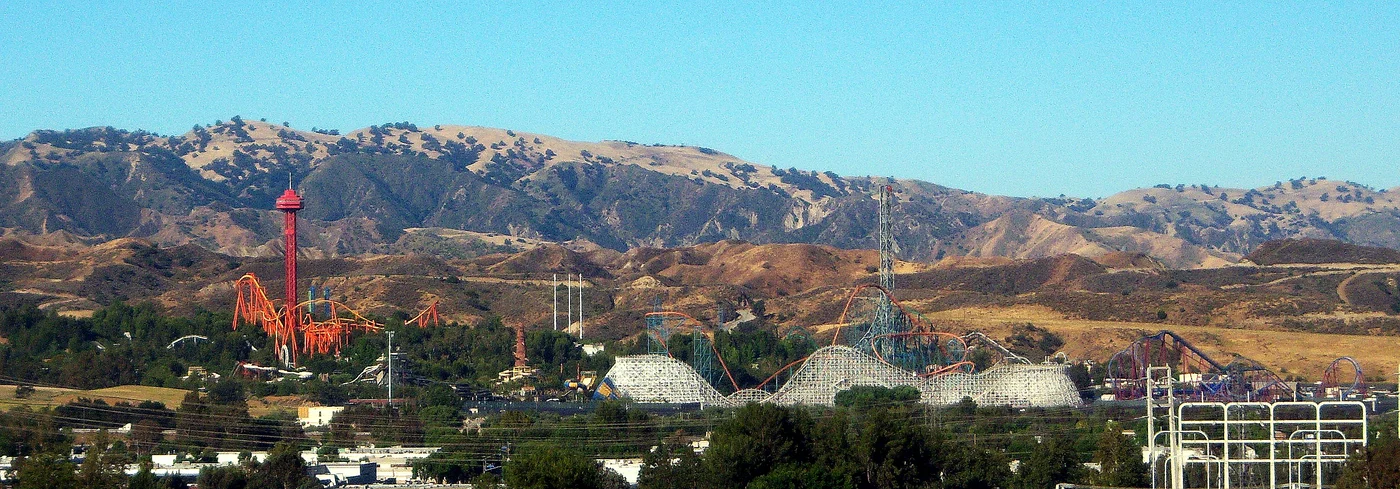

From a distance, Six Flags Magic Mountain looks like a drawing laid across the hills: arcs, towers and overlapping tracks. The historical panorama shown here captures that relationship between an engineered attraction and its landscape. It is a photograph from 2008, not a guide to which rides operate today. For current attractions and practical planning, the park's own website is the appropriate starting point.
A place to plan around, not rush through
Magic Mountain's official information distinguishes thrill rides from family and children's attractions. That makes a useful first question for a mixed group: what does each person want from the day? A visit built around intense rides will look different from one organized around younger children or a relaxed pace. Let those preferences shape the plan before comparing tickets or arranging the trip.
Check the operator's current calendar, individual attraction information and admission conditions together. A photograph cannot establish today's availability, and a general description cannot answer every accessibility or rider-requirement question. Reading the current details directly helps a group decide what is realistic without relying on an old recommendation or a remembered visit. Keep a flexible alternative in mind if a particular attraction is unavailable.
Look beyond the next ride
The park is also a way to notice the valley's contrasts. In the image, the tracks stand against ridgelines instead of disappearing into a continuous city skyline. The distant viewpoint makes the whole composition legible. Up close, a visitor experiences the place differently: through entrances, paths, queues and the route between activities. Both views belong to the same landmark, but neither needs a superlative to make it interesting.
For a family outing, discuss the practical arrangements that tend to be forgotten while choosing attractions. Who will drive? Where will the group meet if people separate? What must come along, and what can stay home? These are planning questions rather than predictions about conditions at the park. They help separate the attraction itself from the decisions each visitor controls.
Keep the park operator's information distinct from independent insurance guidance. Admission, parking and ride rules are not insurance policy terms. Likewise, mentioning a landmark does not indicate that its operator recommends an agency, that a visitor has particular coverage, or that a nearby address has a particular risk. This page uses the park as local context only.
The drive deserves its own review
A day out can prompt a sensible auto-insurance conversation before the keys change hands. Ask how the policy treats the drivers who use the car, whether the stated use is accurate, and which benefits address damage to the vehicle rather than responsibility for harm to others. The California Department of Insurance explains those distinctions in its automobile guide. Do not infer an answer from the destination or from the fact that a trip is recreational.
Bring the actual declarations and endorsements to that discussion. A question about another driver or an optional benefit is more useful when tied to the policy that would apply. The issued policy and endorsements control; a park visit creates no promise of coverage. Our auto guide offers a place to organize those questions before asking the agency to respond.